







Was it ever brought to your attention that many of the working sectors or job titles upon which today’s children will construct a career in the future do not yet exist or have not yet been invented?
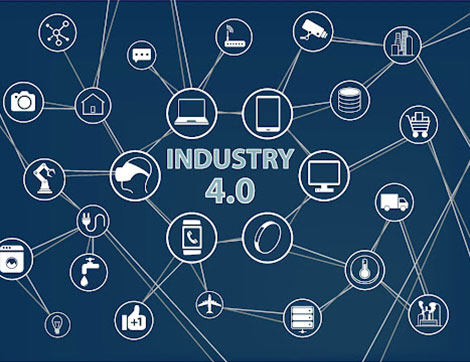
Industry 4.0 has brought about many changes in the field of education. Cyber-physical systems, big data, and artificial intelligence are just a few examples of the technologies that are changing the way we learn.
One of the most important aspects of Industry 4.0 is the globalisation of work. With technology, it is now possible for people to work from anywhere in the world. This has led to a rise in virtual schools and online courses. The fourth industrial revolution, or Industry 4.0, is based on the use of cyber-physical systems to lift the boundary between the real and the virtual world. This allows for a more integrated and automated production process, which can lead to increased efficiency and productivity.
Over the course of the previous 250 years, we have witnessed four separate industrial revolutions, each of which has fundamentally altered our perspective of humanity.
Industry 1.0 was based on water and steam-powered mechanical production equipment. Industry 2.0 was based on the division of labour and mass production through the use of electrical energy. Industry 3.0 was based on the use of electronic and information technologies to further automate production. And Industry 4.0 is based on the use of cyber-physical systems to lift the boundary between the real and the virtual world.
Each industrial revolution has brought about sweeping changes in how we produce goods and services. Industry 1.0 was mainly about mechanising production processes. Industry 2.0 saw the rise of mass production through the use of assembly lines. Industry 3.0 saw the advent of information and communication technologies, which led to more automated production processes. And Industry 4.0 is characterised by the increased use of cyber-physical systems, which allows for a greater degree of integration between the physical and virtual worlds.
The Industry 4.0 education revolution ushers in a new era (Education 4.0), where learning must be transformed from the ground up!
So, what exactly does Education 4.0 actually involve?
Industry 4.0 is the fourth industrial revolution, which is based on the use of cyber-physical systems to lift the boundary between the real and the virtual world. This allows for greater automation and communication between machines, resulting in increased efficiency and productivity. For example, factories are becoming more automated, and businesses are using digital technologies to connect with customers in new ways. In the future, we can expect even more change as more and more things become connected to the internet. So what does this mean for you? Well, if you want to stay ahead of the curve, you need to learn how to use digital technologies yourself. And if you’re looking for a job, you may want to consider careers that are connected to the fourth industrial revolution, like data analysis or software development. The future is exciting, and the fourth industrial revolution is just getting started!
How does Industry 4.0 work?
Industry 4.0 uses a combination of physical and virtual sensors to collect data, which is then processed and analysed by machines. This allows for greater automation and communication between machines, resulting in increased efficiency and productivity.
What are the benefits of Industry 4.0?
The benefits of Industry 4.0 include increased efficiency and productivity, as well as reduced waste and decreased costs. Industry 4.0 can also lead to improved safety and quality, as well as increased innovation.
Explanation: The fourth industrial revolution
The fourth industrial revolution is based on technology, which is constantly changing and evolving. In order to keep up with this change, education must also adapt. This means that the traditional way of teaching in a classroom is no longer sufficient.
One of the key differences is that technology in education based on the fourth industrial revolution is more personalised. It takes into account each student’s individual needs and abilities, and tailor the learning experience accordingly. This helps to ensure that students are able to learn at their own pace and achieve their full potential.
In addition, technology in education based on the fourth industrial revolution makes use of new and innovative methods, such as augmented reality and virtual reality. These technologies allow students to engage with learning in a more interactive and immersive way, which can be more effective than traditional methods. This new revolution has led to a lot of discussion about how technology should be used in education moving forward.
Lets now focus on some of the most common technologies used in education today:
1. Online learning: With online learning, students can learn from anywhere in the world. This is a great option for students who want to learn more about a specific topic or for students who want to specialize in a certain area.
2. Virtual reality: Virtual reality can be used to create immersive learning experiences. For example, students can use virtual reality to travel to different parts of the world and learn about different cultures.
3. Augmented reality: Augmented reality can be used to make learning more interactive and fun. For example, students can use augmented reality to interact with 3D objects and learn about physics or biology.
4. Robotics: Robotics can be used to teach students how to program and build things. This is a great way for students to learn about science, technology, engineering, and math (STEM).
5. Mobile learning: Mobile learning allows students to access their course materials on their mobile devices. This is a great way for students to study on the go.
6. Cloud-based learning: Cloud-based learning allows students to access their course materials from any device. This is a great way for students to study online.
7. Artificial intelligence: Artificial intelligence can be used to personalize education for students. For example, artificial intelligence can recommend different course materials for students based on their interests and needs.
8. Learning analytics: Learning analytics can be used to track student progress and provide feedback to teachers. This is a great way for teachers to see how their students are doing and adjust their teaching strategies accordingly.
9. Adaptive learning: Adaptive learning can be used to personalize education for students. For example, adaptive learning can recommend different course materials for students based on their interests and needs.
10. Gamification: Gamification can be used to make learning more fun and engaging. For example, students can earn badges or points for completing tasks or lessons.
Technology has a huge role to play in education, and the fourth industrial revolution is only going to increase its importance. In order to keep up with the latest advances, it is important for educators to embrace new technologies. These are just some of the ways that technology can be used in education; there are many more options available. So, what are you waiting for? Start using technology in your classroom today!
Overall, technology in education based on the fourth industrial revolution represents a step forward in terms of how we learn and develop. It has the potential to help students achieve more than ever before, and create a brighter future for all.
How does technology in education based on the fourth industrial revolution differ from earlier approaches?