








By using this site, you agree to the Privacy Policy and Terms of Use.
Accept
EduTodayEduToday
  • Home
  • Education
    Education
    Show More
    Top News
    Contextualisation – Why you must contextualise the training and assessment resources.
    October 4, 2021
    How artificial intelligence and machine learning will change the education and training industry
    February 20, 2022
    Compliance is not one person’s responsibility in a training organisation
    May 22, 2022
    Latest News
    What kind of leader should you become?
    October 24, 2022
    What it takes to become a successful strategic learner
    October 24, 2022
    Instructional strategies: what are they?
    October 24, 2022
    Pandemic-related drop in enrolments and delays in student visa approvals causing chaos for RTOs
    August 12, 2022
  • VET Sector
    VET Sector
    Show More
    Top News
    Satisfaction with vocational education and training remains high
    December 17, 2019
    Validation Demystified – Part I
    October 4, 2021
    How to ensure your training organisation is compliant with government regulations
    March 24, 2022
    Latest News
    What are the plans for improving the vocational education and training sector – what are we missing?
    October 24, 2022
    A message from the CEO (October 2022)
    October 24, 2022
    Message from the CEO (12 August 2022)
    August 12, 2022
    In vocational education and training, what is assessment?
    August 12, 2022
  • HEP Sector
    HEP Sector
    Show More
    Top News
    University jobs lost at a rate of ‘one in five’ as COVID-19 border laws continue to bite
    September 19, 2021
    Interview with Peter Doukas – Managing Director, Denison Toyer Education Lawyers
    November 1, 2021
    Contract cheating – One out of every ten students submits assignments written by someone else – and the vast majority of them get away with it.
    January 31, 2022
    Latest News
    Contract cheating – One out of every ten students submits assignments written by someone else – and the vast majority of them get away with it.
    January 31, 2022
    Interview with Peter Doukas – Managing Director, Denison Toyer Education Lawyers
    November 1, 2021
    University jobs lost at a rate of ‘one in five’ as COVID-19 border laws continue to bite
    September 19, 2021
    Online learning is much more than access to training and assessment materials online
    August 22, 2021
  • School Sector
    School Sector
    Show More
    Top News
    How to complete a compliant Trainer Matrix – Part 1 of Part 5
    December 1, 2020
    Mapping document of assessment resources – do you need one?
    October 4, 2021
    Maintain compliance and regulatory register to record legislation change
    June 27, 2022
    Latest News
    Management of operational risks in training organisations
    October 24, 2022
    Strategies on how to promote your training organisation to international students
    October 24, 2022
    Creating a work environment that values employees
    October 24, 2022
    Continually reviewing, improving and self-assurance
    October 24, 2022
  • Australia
    Australia
    Show More
    Top News
    Updates to USI transcript for closed registered training organisations
    November 18, 2019
    ASQA Annual Report 2020-21 now available
    November 1, 2021
    Understanding the National Vocational Education and Training Regulator Amendment Bill 2019
    February 20, 2020
    Latest News
    During the IHEA Dual-Sector Network conference, Sukh Sandhu addressed issues and changes in the VET sector.
    August 12, 2022
    ASQA’s as a national training package assurance body
    July 17, 2022
    A database of cheating websites has been updated through intelligence sharing.
    July 17, 2022
    An ASQA initiative called Pathways and Perspectives has been launched
    July 17, 2022
  • Science & Tech
    Science & Tech
    Show More
    Top News
    Various phases of the assessment and validation processes (Part 3)
    August 31, 2021
    Unpacking ASQA audit reports and files (Part 3)
    October 1, 2019
    Part 1- The importance of internal audits
    September 8, 2021
    Latest News
    The purpose of due-diligence audits
    August 12, 2022
    Set boundaries, establish guidelines, and work within them.
    June 27, 2022
    Message from the CEO
    October 14, 2021
    Why organisations should prioritise systematic continuous improvement as a strategic priority
    October 14, 2021
  • More
    • TV
    • Movies
Reading: Differentiating instruction – Planning lessons based on different learners’ needs
Notification Show More
Latest News
Australian gov’t to review HE in long-term plan
News
Australia declined 50% of student visa applications from India in 2022
News
New Victoria University program gives high school leavers ‘space’ to figure out future
News
Fee-free TAFE and VET places for South Australians – Ai Group comment
News
CQU vocational education leader receives accolade
News
Aa
Aa
EduTodayEduToday
  • Business
  • Industry
  • Politics
  • Home
    • Home 1
    • Home 2
    • Home 3
    • Home 4
    • Home 5
  • Categories
    • Industry
    • Business
    • Politics
  • Bookmarks
  • More Foxiz
    • Sitemap
Have an existing account? Sign In
Follow US
  • Advertise
© 2022 Foxiz News Network. Ruby Design Company. All Rights Reserved.
Training and Assessment

Differentiating instruction – Planning lessons based on different learners’ needs

Vijay
Last updated: 2022/10/24 at 7:06 AM
By Vijay 5 Min Read

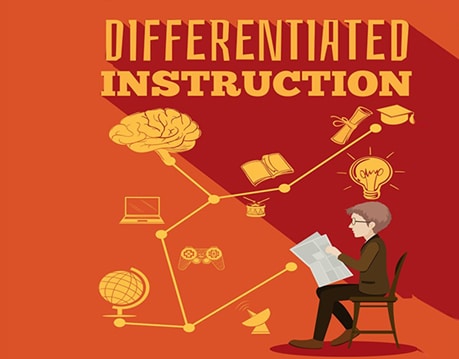
One of the most important aspects of being a successful teacher/trainer and assessor is the ability to adapt your instruction to meet the needs of different types of learners. While some students may be able to grasp new material quickly and easily, others may need more time and support. Some students may be visual learners and learn best by seeing information presented in a visual format. Other students may be auditory learners and learn best by hearing information presented orally. Still, other students are kinesthetic learners and learn best by doing or moving around. 

Differentiation is key in ensuring that all students have access to the curriculum and are able to learn at their own pace. There are a variety of ways to differentiate instruction, and it is important to find what works best for you and your students.

As Carol Ann Tomlinson (an educator) points out, there are four different approaches teachers can take in order to differentiate their instruction:

  1. Content: Identifying what students need to learn and finding out which resources will help them to do that
  2. Process: The activities that help students understand what they have learned and make sense of it
  3. Projects: A way for students to demonstrate their understanding of a topic
  4. Learning environment: The way the classroom is set up as well as how the students work together as a group

Using this approach is a good compliment to some schools’ response to intervention (RTI) program which has proven to be effective. In order for RTI to be successful, it must address learning difficulties at an early stage. It is important for students to get extra support before they fall behind their peers in the classroom.

Here are some strategies for differentiating instruction:

  • Use a variety of instructional methods. Some students learn best through listening to lectures, while others prefer hands-on activities. Offering a variety of instructional methods will ensure that all students are able to learn in a way that works best for them. For example, if you’re teaching a lesson on fractions, you might provide some students with manipulative objects like blocks or beads to help them understand the concept, while others might benefit from a worksheet with practice problems. 
  • Make use of technology. Technology can be a great tool for differentiating instruction. There are a variety of apps and websites that offer content at different levels, which can be helpful for students who are struggling or need an extra challenge.
  • Create differentiated assignments. Not all students will be able to complete the same assignments. Offering assignments that are tailored to different learning styles will ensure that all students are able to show what they have learned.
  • Use flexible grouping. Grouping students together based on ability level can be helpful in ensuring that all students are challenged without being overwhelmed. This can be done using a variety of methods, such as centres, stations, or partner work.
  • Be aware of your student’s interests. Incorporating students’ interests into the curriculum can be a great way to engage them in learning. If you know that a particular student is interested in a certain topic, try to find ways to incorporate that into your lessons. For example, some students learn best by working independently, while others learn best in a group setting. You can accommodate different learning styles by providing both independent and group work time during your lesson.

Finally, it’s important to remember that all students learn at different rates. Some students will grasp a concept right away, while others might need more time to process the information. Differentiating instruction means providing different levels of support to meet the needs of all learners.

By taking into account the different learning styles and preferences of your students, you can create a classroom environment that is conducive to learning for all. 

Differentiating instruction is an important part of being a successful teacher. By using a variety of methods and being aware of your student’s needs, you can ensure that all students have access to the curriculum and are able to learn at their own pace.

References 

Coleman Tucker, G. (n.d.). What Is Differentiated instruction? Www.understood.org. https://www.understood.org/en/articles/differentiated-instruction-what-you-need-to-know
Post Views: 160

[ruby_related total=5 layout=5]

Previous Article The Instructional Design Process – The Five Steps
Next Article Instructional strategies: what are they?
Leave a comment

Leave a Reply Cancel reply

Your email address will not be published. Required fields are marked *

EduTodayEduToday

© 2022 EduToday. Online Media Solutions. All Rights Reserved.

Removed from reading list

Undo
Welcome Back!

Sign in to your account

Lost your password?